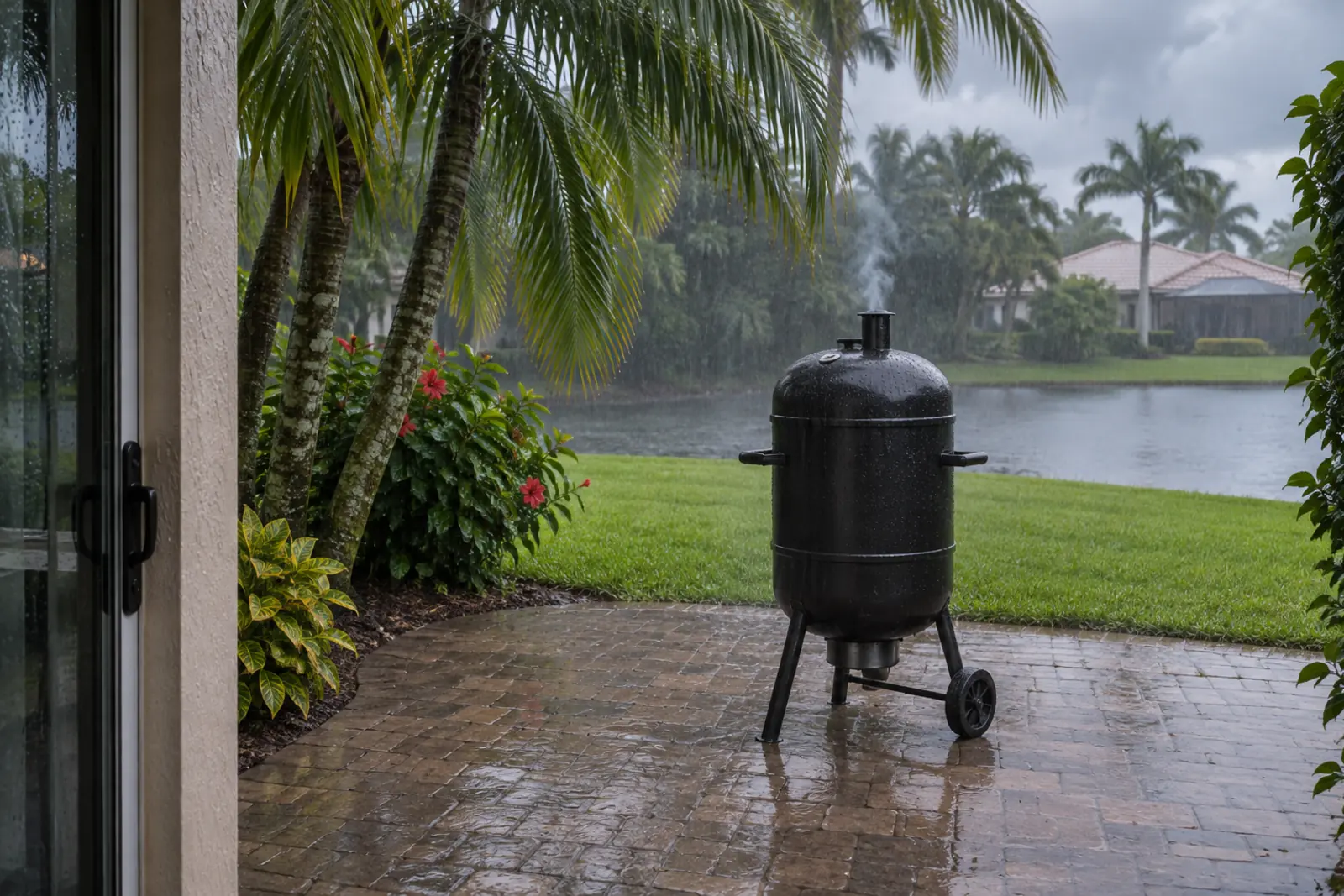
Yes, you can smoke meat in humid weather, in the heat and even in light rain, but thunder ends the cook. Humidity slows evaporation from the meat's surface, so bark sets later and the stall can last longer. Heat makes low pit temperatures easier to hold but is harder on the cook. Rain is manageable under a safe, open-sided cover. In Southwest Florida the practical routine is to start early, keep fuel dry, trust a thermometer rather than the clock, and go indoors when you hear thunder.
How Naples weather shapes a cook
Naples has a warm, humid climate with a wet season that commonly runs from about June into October and a drier, milder season from late fall through spring. During the wet months, mornings are often calmer and storms are more likely to build in the afternoon and early evening. In the dry season, cooler air and lower humidity make outdoor cooking far more comfortable, and long overnight cooks are easier.
| Season | What to expect | Cooking implications |
|---|---|---|
| Wet season (roughly June–October) | Heat, high humidity, frequent afternoon storms | Start early, plan for rain, watch for lightning; overlaps hurricane season |
| Dry season (roughly November–May) | Milder temperatures, lower humidity, less rain | Best time for long smokes; occasional cool fronts and wind |
The wet season overlaps hurricane season, when a forecast storm can mean a power outage as well as a rained-out cook. Plans for that are covered in the guide to grilling during hurricane season and power outages.
Smoking meat in humid weather: what actually changes
Humidity does not change the temperatures at which meat is safe or done. What it changes is how the surface behaves and how the fuel burns. Three effects matter most.
Bark and the stall
Bark forms as the surface of the meat dries and the rub, fat and smoke compounds set. Very humid air slows that drying. Cooks in humid places often notice that bark takes longer to firm up and that the stall, the long plateau in internal temperature caused by evaporative cooling, can behave differently than recipes suggest. Do not chase a schedule. Judge bark by color and feel, and judge doneness by tenderness, as explained in the pulled pork guide.
Wrapping a large cut in butcher paper or foil is a common way to push through a long stall. It trades some bark firmness for time, so wrap only when the bark has already set the way you want it.
Fuel and pellets
Humidity is hard on fuel. Charcoal absorbs moisture and becomes slow to light. Wood pellets swell and crumble when they get damp, which can jam an auger and cause a pellet grill to lose its fire. Keep charcoal in a closed bin and pellets in an airtight container, and empty the pellet hopper after a cook if rain or high humidity is coming. Wood storage tips are in the smoking wood guide.
Salt air and moisture on the cooker
Near the Gulf, humidity and salt air also work on the cooker itself, accelerating rust on vents, hinges and thin steel. Wipe down and cover the smoker after it cools, and see the guide to choosing a grill or smoker for a coastal climate for materials that hold up better.
Smoking meat in the heat
A smoker sitting in 90°F air needs less fuel to hold 225°F than one sitting in 50°F air, and temperature swings from outside cooling are smaller. Direct sun on a dark cooker can push the internal temperature up, especially on thin-walled models, so watch for creeping temperatures around midday and adjust the intake vent early. Placing the cooker in shade, away from walls that radiate heat, makes holding temperature easier.
The cook is the weak link. Tending a fire for hours in heat and humidity can lead to heat exhaustion. The CDC's heat illness guidance lists warning signs such as heavy sweating, cold and clammy skin, dizziness, nausea and muscle cramps. Drink water regularly, take breaks in shade or air conditioning, and use a wireless thermometer so you can monitor from indoors.
Heat also affects the food once it comes off the smoker. Perishable food that sits out above 90°F should be out for no more than one hour; the full rules are in the barbecue food safety guide.
Can you smoke meat in the rain?
Yes, if the cooker is under a safe cover and there is no lightning. Rain alone does not harm the meat, but it cools thin metal cookers, wets fuel and can damage electronics. The points below keep a rainy cook under control.
- Use proper cover. A grill gazebo or a covered area designed for grills, with open sides and plenty of clearance above, keeps rain off without trapping smoke and heat.
- Never move a lit grill or smoker into a garage, enclosed porch, tent or under a low overhang. Charcoal and gas produce carbon monoxide, and trapped heat is a fire risk.
- Watch the thermometer. Cold rain on a thin metal cooker drops the temperature; open the intake slightly to compensate.
- Protect electronics. Pellet grill controllers and wireless thermometer receivers are not all rated for rain. Check the manual.
- Check drainage. Grease trays and ash pans can overflow when rainwater gets in.
- Keep the lid shut. Opening the lid in the rain lets in cold, wet air and extends the cook.
If you live in a condo or apartment, covered balconies and overhangs bring fire code rules into play; see the guide to grilling rules at Florida condos.
Smoking in a thunderstorm: the hard stop
Do not tend a smoker during a thunderstorm. The National Weather Service message is simple: when thunder roars, go indoors. If you can hear thunder, you are close enough to be struck. The NWS advises staying in a safe shelter for at least 30 minutes after the last thunder you hear.
A grill gazebo does not count as shelter. According to the National Weather Service, safe shelters are buildings with electricity and plumbing, or metal-topped vehicles with the windows closed, and picnic shelters and small buildings without plumbing or electricity are not safe. A cover that keeps the rain off the smoker will not protect the person standing beside it. See the NWS pages on safe shelter during lightning and outdoor lightning safety.
A practical plan for a long summer smoke:
- Check the forecast and radar before lighting the fire.
- Load enough fuel to carry the cooker for an hour or more without attention.
- Set a wireless thermometer so you can watch from indoors.
- When thunder starts, close the lid, leave the vents where they are and go inside.
- After the storm, check the fire, the fuel and the meat temperature before adjusting anything.
If the meat sat in the cooker through a long pause and the pit dropped, check internal temperatures against the safe ranges in the BBQ temperature and cook time chart before serving.
Timing a summer cook
| Cook | Suggested timing in the wet season |
|---|---|
| Ribs (5–6 hours) | Start shortly after sunrise to finish by early afternoon |
| Pork shoulder (10–14 hours) | Start late at night or before dawn; rest in a cooler if it finishes early |
| Brisket (10–16 hours) | Overnight start, with a long rest built in |
| Chicken (1–3 hours) | Morning or after the storms pass in the evening |
These are rough windows; big cuts vary a lot from one cook to the next, so leave more slack than you think you need. When cooking for a crowd, work out quantities first with the guide to how much BBQ per person so the timing matches the amount of meat.
Bugs, wildlife and food
Warm, wet weather brings mosquitoes and flies. Keep food covered, keep the cooler closed, and clean the grill and grease tray after cooking so they do not attract raccoons and other animals overnight. Dispose of cooled ash in a metal container with a lid, never in a plastic bin.
Frequently Asked Questions
Can I smoke meat in the rain?
Yes, if the smoker is under a safe, open-sided cover with good clearance and away from the house. Never move a lit cooker into a garage or enclosed space. Stop and go indoors if there is thunder or lightning.
Does humidity affect smoking meat?
It can. Humid air slows surface drying, which often means bark sets more slowly and the stall may last longer. Plan extra time and judge doneness by tenderness rather than the clock. Humidity does not change safe internal temperatures.
What should I do with my smoker during a thunderstorm?
Close the lid, leave the vents as they are and go indoors. The National Weather Service advises waiting at least 30 minutes after the last thunder before returning. A well-fueled smoker can usually hold temperature for a while on its own.
How do I keep pellets dry in Florida?
Store them in an airtight container indoors or in a dry shed, and empty the hopper after cooking if rain or high humidity is expected. Damp pellets swell, crumble and can jam the auger.
When is the best time of year to smoke meat in Naples?
The drier, milder months from late fall through spring are the most comfortable. In the wet season, early starts or overnight cooks avoid the hottest part of the day and the typical afternoon storms.