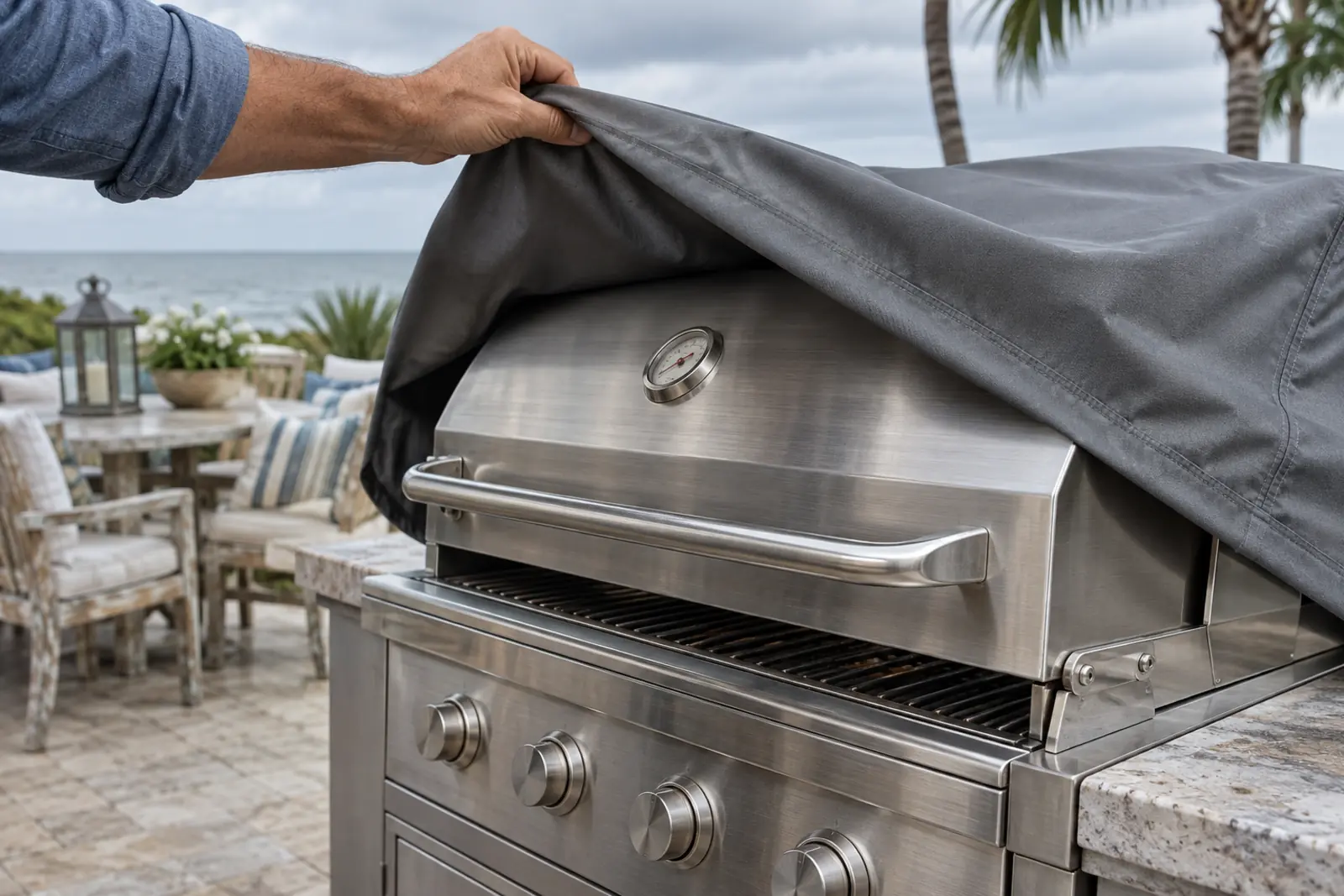
The best grill for a coastal environment like Naples is one built from corrosion-resistant materials, kept out of rain and salt spray, and suited to where you are allowed to cook. Higher grades of stainless steel such as 304 (and 316 for the harshest spots), porcelain-enameled steel and heavy ceramic hold up far better in salt air than thin painted steel or lower-grade stainless. Charcoal kettles and kamado cookers are simple and work without power. Pellet grills are convenient but rely on electricity and dry pellets. Gas grills are fast and easy. Electric grills are often the only legal choice for condo balconies. Whatever you buy, a breathable cover, regular cleaning and dry fuel storage add years to its life.
This guide compares types and materials. It does not recommend brands or local sellers.
Best grill for a coastal environment: quick picks by situation
No single type wins everywhere on the coast. The right choice depends on how close you are to the water, whether the cooker lives under cover, and how you cook. Use these as a starting point, then check the materials and the rules for your building.
- Within a few blocks of the Gulf or exposed to onshore wind: favor ceramic bodies (kamado), porcelain-enameled steel without chips, or stainless steel, and ask about the grade of the hardware and burners.
- Inland Naples or Collier County, under a covered lanai or garage overhang: salt exposure is lower, but humidity is still constant, so dry storage, a cover and regular cleaning matter more than the type.
- Condo or apartment balcony: a listed electric tabletop grill is generally the only option that fits Florida's balcony rules (details below).
- Power outages are a concern: choose charcoal, kamado or gas rather than a pellet grill as the main cooker.
Grill and smoker types compared
| Type | Best at | Strengths | Drawbacks in a humid coastal climate |
|---|---|---|---|
| Charcoal kettle | Grilling and moderate smoking | Affordable, versatile, no power needed | Thin steel bowls and legs can rust; ash holds moisture |
| Kamado (ceramic) | Long smokes, high-heat grilling | Excellent heat retention, fuel-efficient, ceramic does not rust | Heavy, expensive; metal bands, hinges and carts still corrode; ceramic can crack if mishandled |
| Offset smoker | Large briskets and pork shoulders | Traditional wood-fired flavor, big capacity | Thin models rust quickly and lose heat in wind; demands constant fire tending |
| Pellet grill | Hands-off smoking | Thermostat control, easy for beginners | Needs electricity; damp pellets jam augers; electronics dislike moisture |
| Gas grill | Fast weeknight grilling | Quick start, easy temperature control | Burners, igniters and grease trays corrode; limited smoke flavor |
| Electric grill | Balconies and small spaces | Can comply with Florida's balcony exception; no open flame | No real smoke flavor; needs a safe outdoor outlet |
| Vertical water smoker | Budget smoking | Small footprint, steady low heat | Thin metal and water pans prone to rust |
Best gas grill for a coastal environment
For a gas grill near salt water, the body matters less than the parts that sit in heat, moisture and grease: burners, igniter, valves, grease tray, hoses and fasteners. These are the components the table above flags as the usual failure points. When comparing models, ask what each of those parts is made of, whether replacements are sold separately, and whether the warranty covers corrosion. A grill with a stainless lid and firebox but thin, painted or plated small parts will still age quickly at the coast.
Best grill for a humid climate
Humidity without salt (for example, a covered lanai away from the beach) is easier on a grill than salt air, but it still keeps surfaces damp for long periods. Ceramic, porcelain-enameled and stainless bodies cope best, and the habits that count are drying the cooker before covering it, emptying ash, and storing pellets and charcoal in sealed containers. Pellet grills need extra care because pellets swell and crumble when damp, which can jam the auger.
Stainless steel grill in salt air: which grade to choose
Salt in the air speeds up corrosion, and humidity keeps surfaces damp. Properties within a few blocks of the beach and those exposed to onshore breezes feel it the most. Stainless steel needs roughly 10.5% or more chromium to form the thin protective film that resists rust, according to the Wikipedia article on stainless steel, and pitting, a localized form of attack on that film, is most common in the presence of chloride ions such as those in salt.
- Stainless steel grades matter. Type 304 stainless contains nickel and somewhat more chromium than type 430, which has little or no nickel, and it generally resists corrosion better. Cheaper grills often use 430, which can show surface rust sooner near salt water. A magnet sticks firmly to 430 but only weakly or not at all to most 304, which is a quick, rough check in a showroom. (Type 430 is a magnetic ferritic grade.)
- Type 316 is the step up for salt exposure. It adds roughly 2 to 3% molybdenum, which improves resistance to pitting from chlorides, and it is described as the preferred stainless grade for marine environments in the marine grade stainless overview. Even 316 is not completely rust-proof, and few home grills use it throughout, so ask where it is used.
- Porcelain enamel protects steel well as long as it is not chipped. Chips expose bare metal, which then rusts.
- Ceramic bodies on kamados do not rust, but check what the hinges, bands, fasteners and stand are made of.
- Cast iron grates hold heat beautifully but rust if not kept oiled and dry. Stainless or porcelain-coated grates need less care.
- Painted thin steel is the most vulnerable. Expect to touch up or replace parts.
- Fasteners and small parts are often the first to fail. Stainless hardware is worth asking about.
Even good stainless can show light surface discoloration near the water. Regular rinsing and wiping of the exterior (see the care routine below) is what keeps it from turning into pitting.
Where you are allowed to cook decides a lot
If you live in a condominium or apartment building, Florida's fire code bars charcoal and gas grills on balconies, under overhangs and within 10 feet of the building, while allowing listed electric tabletop grills up to 200 square inches of cooking surface. Many associations are stricter. Read the condo and balcony grilling guide before buying anything that burns fuel. In a single-family home, follow the manufacturer's clearance distances and keep the cooker away from walls, eaves and lanai screens.
Power and storms
Pellet grills and many smart controllers need household current. During a hurricane-related outage, a charcoal kettle, kamado or gas grill with a spare cylinder keeps working. If you buy a pellet grill as your main cooker, consider keeping a basic charcoal grill as a backup. The hurricane season grilling guide covers preparing and securing equipment before storms, and the page on smoking meat in heat, humidity and summer storms covers how weather affects the cook itself.
Care routine for salt air and humidity
| When | Task |
|---|---|
| After each cook | Burn off and brush grates; empty ash once cold; let the cooker dry before covering |
| Weekly in heavy use | Wipe exterior stainless with a damp cloth to remove salt film; dry it |
| Monthly | Clean grease trays and drip pans; check for rust spots and touch up |
| Every season | Inspect gas hoses and burners; tighten fasteners; re-season cast iron; check pellet auger |
| Before storms | Disconnect propane, empty pellet hopper, secure or store the grill |
- Use a breathable, fitted cover and remove it now and then so moisture does not stay trapped underneath.
- Never cover a hot cooker. Wait until it is fully cool.
- Do not leave ash in the firebox. Ash absorbs moisture and becomes corrosive.
- Store fuel dry. Pellets and charcoal belong in sealed containers; see the smoking wood guide for wood storage.
Questions to ask before you buy
- What grade of stainless steel or what coating is used on the body, lid, grates and burners?
- What does the warranty cover, for how long, and does it exclude coastal or salt-air corrosion?
- Are replacement parts such as burners, grates and controllers easy to get?
- Does it need electricity? What happens in an outage?
- Will it fit where it is allowed to be used, with the required clearances?
- How much fuel does it use per hour at smoking temperatures?
- Is the cooking area big enough for your usual crowd? The BBQ per person guide helps estimate how much meat you will cook at once.
Some warranties exclude corrosion caused by environmental conditions such as salt air. Read the terms before you buy, and keep the receipt.
Typical price ranges
Prices change often and vary by size and build quality, so treat these only as rough orientation and verify current prices with sellers. Basic charcoal kettles and small electric grills are usually the least expensive. Mid-range gas and pellet grills cost more. Heavy kamados, well-built offset smokers and premium stainless gas grills sit at the top of the range, often costing many times what a basic kettle does. In salt air, spending more on materials often pays back in years of use.
Matching a cooker to how you cook
- Mostly burgers, chicken and fish on weeknights: a gas grill, with a smoker box for occasional smoke flavor.
- Weekend pulled pork and ribs, minimal fuss: a pellet grill or kamado. Whichever you pick, a probe thermometer and the BBQ temperature and cook time chart take the guesswork out of doneness.
- Big brisket cooks and wood-fired flavor: a heavy-gauge offset smoker, if you have time to tend it.
- Condo balcony: a listed electric tabletop grill, if your association allows it.
- Tight budget: a charcoal kettle, which can both grill and smoke with an indirect setup.
Frequently Asked Questions
What is the best grill material for salt air?
Higher-grade stainless steel such as type 304, porcelain-enameled steel without chips, and ceramic bodies generally hold up best. Thin painted steel and lower-grade stainless such as type 430 tend to rust sooner near the coast.
Are pellet grills a good choice in Florida?
They work well if you keep pellets dry and protect the electronics from rain. Because they need electricity, they will not run during a power outage without a safe power source, so many owners keep a charcoal grill as a backup.
How do I stop my grill from rusting near the beach?
Clean and dry it after use, wipe off salt film regularly, empty ash, touch up chips in enamel or paint, and use a breathable cover. Keep it out of direct salt spray where possible.
Can I use a kamado grill on a condo balcony?
Generally no. In Florida multifamily buildings, the fire code prohibits using charcoal grills, including kamados, on balconies, under overhangs or within 10 feet of the building. Check with your association and fire marshal.
Do grill warranties cover rust?
It depends on the manufacturer. Some warranties exclude corrosion from environmental conditions such as salt air or exclude surface rust. Read the warranty terms before you buy.