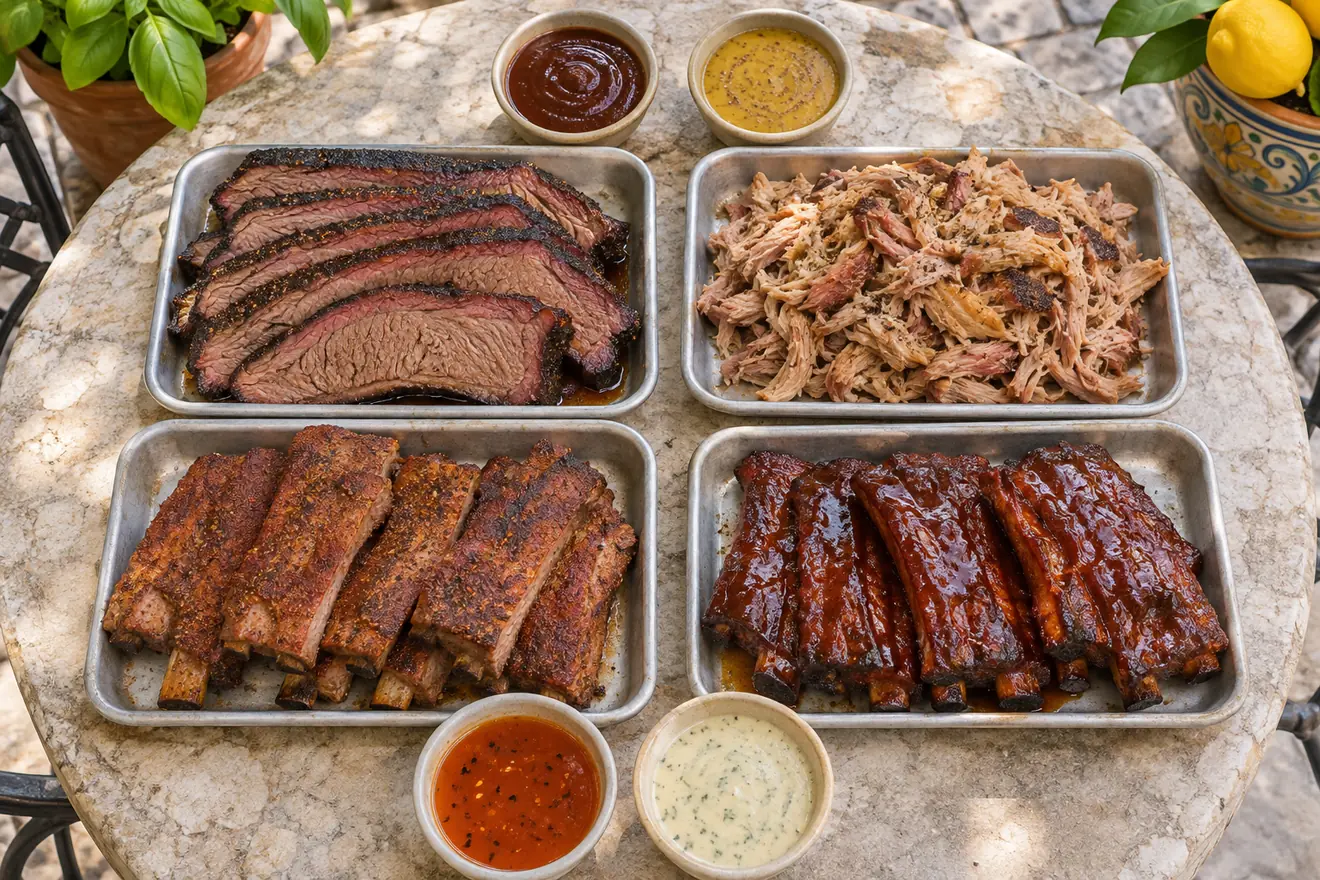
Regional barbecue styles in the United States are defined by the meat, the wood, the seasoning and above all the sauce. The four most often compared are Central Texas (beef brisket with salt and pepper), the Carolinas (pork with vinegar or mustard sauces), Memphis (pork ribs, dry or wet) and Kansas City (many meats under a thick, sweet tomato sauce). Northern Alabama adds a fifth, famous for smoked chicken with a white mayonnaise sauce. Florida, including Naples and the rest of the Gulf Coast, borrows from all of them and adds smoked fish and Cuban-style roast pork to the mix.
This guide explains what defines each style, so a menu, a recipe or a backyard cook makes more sense. It does not rate restaurants or tell you which style is best. That part is up to you.
What barbecue actually means
In the American sense, barbecue usually means cooking meat slowly with indirect heat and wood smoke, at temperatures far below what you would use for grilling. A pit or smoker held somewhere around 225°F to 275°F turns tough, collagen-rich cuts like pork shoulder, brisket and spare ribs into tender meat over many hours. Grilling, by contrast, is fast cooking over direct heat. Both are fine. They are simply different techniques, and the regional styles below are mostly about the slow kind.
The main regional styles at a glance
| Style | Signature meat | Typical seasoning or sauce | What to expect |
|---|---|---|---|
| Central Texas | Beef brisket, beef ribs, sausage | Salt and coarse black pepper; sauce optional | Dark bark, pink smoke ring, meat sold by weight |
| East Texas | Chopped beef, pork ribs | Sweeter tomato sauce | Meat often chopped and sauced for sandwiches |
| Eastern North Carolina | Whole hog | Vinegar and red pepper, no tomato | Chopped pork mixing light and dark meat |
| Lexington / Piedmont NC | Pork shoulder | Vinegar with some tomato or ketchup ("dip") | Chopped or sliced pork, red slaw on the side |
| South Carolina (Midlands) | Pork | Yellow mustard-based sauce | Tangy, golden sauce sometimes called Carolina gold |
| Memphis | Pork ribs, pulled pork | Paprika-heavy dry rub, or a thin tomato sauce | Ribs ordered "dry" or "wet" |
| Kansas City | Ribs, brisket, burnt ends, chicken | Thick, sweet tomato and molasses sauce | Generous sauce, wide variety of meats |
| North Alabama | Chicken, pork | White sauce of mayonnaise, vinegar and pepper | Smoked chicken dunked or basted in white sauce |
Two lines of difference run through the whole table. The first is the meat: beef in Texas, pork almost everywhere else, chicken in Alabama. The second is the sauce, which ranges from none at all to a thick, sweet glaze, and is covered next.
BBQ sauce styles by region
If you only remember one thing about regional barbecue, remember the sauces. According to the overview of barbecue sauce on Wikipedia, the classic American types break down like this:
- Kansas City: tomato-based with sugar, vinegar and spices; thick and reddish-brown.
- Memphis: similar to the western Carolina style, sweetened with molasses and seasoned with extra spices.
- Eastern North Carolina vinegar: vinegar, ground black pepper and hot chili pepper flakes, with no tomato.
- Western North Carolina (Lexington): the same vinegar-and-pepper base with tomato paste, tomato sauce or ketchup added.
- South Carolina mustard: yellow mustard, vinegar, sugar and spices.
- Texas: cumin, chili pepper or chili powder, black pepper and fresh onion, with less tomato and sugar than the sweeter styles.
- Alabama white: mayonnaise, apple cider vinegar, sugar, salt and black pepper.
Texas: beef, salt and pepper
Central Texas barbecue grew out of meat markets and is the style most people picture when they think of brisket. The rub is often just kosher salt and coarse pepper, applied to a whole packer brisket that cooks for 10 hours or more. Post oak is the traditional wood. The result should slice cleanly, hold together and pull apart with gentle pressure. Sauce, if offered at all, sits on the side.
The market roots are literal. Wikipedia's article on Texas barbecue says German and Czech settlers brought meat-smoking traditions to Central Texas in the mid-19th century, and meat markets that sold smoked meats followed. At a pit-style restaurant the meat is carved and sold by weight, and markets traditionally served it wrapped in red butcher paper.
Texas is large enough to hold several traditions. East Texas leans toward chopped meat and sweeter sauces. West Texas, sometimes called cowboy style, cooks more directly over mesquite and has used goat and mutton as well as beef. South Texas has a history of barbacoa, originally cooked in pits in the ground. If you want to try brisket at home, the cooking principles in the guide to barbecue temperatures and cook times apply directly.
The Carolinas: pork and vinegar
North Carolina has two well-known schools. In the eastern part of the state, the tradition is the whole hog, chopped and dressed with a thin sauce of vinegar, salt, black pepper and crushed red pepper. In the Piedmont, often called Lexington style after the town most associated with it, cooks use pork shoulder and add a little tomato or ketchup to the vinegar. Slaw in that region is often red, made with the same dip.
Lexington style uses only the shoulder, typically served pulled or very lightly chopped and hushpuppies are usually eaten with it. The "red slaw" or "barbecue slaw" replaces mayonnaise with the same vinegar-and-tomato dip, as described in the Wikipedia entry on Lexington-style barbecue. Pork shoulder is also the usual cut for backyard cooks, and the step-by-step guide to smoking pulled pork shows how to get there.
South Carolina adds a third sauce family. In the Midlands, a yellow mustard sauce is common, and it pairs well with pork. Other parts of the state use vinegar-pepper or light tomato sauces, so it is not a single style either.
Texas vs Carolina BBQ: what is the real difference?
The short answer is beef versus pork, and dry versus sauced. Texas barbecue centers on beef, especially brisket, with a salt-and-pepper rub where the smoke and the beef do the work. Carolina barbecue is pork, either whole hog or shoulder, pulled or chopped and dressed with a thin, tangy sauce that cuts through the fat.
- Meat: brisket, beef ribs and sausage in Central Texas; whole hog or shoulder in the Carolinas.
- Sauce: optional and on the side in Central Texas; part of the dish in the Carolinas, whether vinegar-pepper, vinegar-tomato or mustard.
- Serving: sliced and sold by weight in Texas; chopped or pulled, usually with slaw, in the Carolinas.
Memphis: ribs, dry or wet
Memphis is a pork town, and ribs are the headline. A "dry" rib is seasoned with a rub heavy in paprika, garlic and other spices, sometimes with a final dusting after cooking, and served without sauce. A "wet" rib is mopped or glazed with a thin, tangy tomato sauce. Pulled pork sandwiches topped with slaw are just as much a part of the local tradition.
The city also hosts the World Championship Barbecue Cooking Contest each May as part of Memphis in May, listed in Guinness World Records as the largest pork barbecue contest in the world and drawing more than 100,000 visitors, according to Wikipedia's article on Memphis-style barbecue.
Kansas City: a bit of everything, and sauce
Kansas City is known for range. Ribs, brisket, chicken, sausage and turkey all show up, along with burnt ends, the crusty, fatty cubes cut from the point of a brisket. The sauce is what most people recognize: thick, sweet and tomato-based, often with molasses or brown sugar. Many bottled supermarket sauces follow this general profile.
Burnt ends are credited to the Kansas City restaurant Arthur Bryant's and its pitmaster, who reportedly used the brisket edges to judge whether the meat was fully cooked. Kansas City writer Calvin Trillin helped popularize them by writing about the burned edges offered free at Bryant's, according to Wikipedia's entry on burnt ends.
Alabama white sauce
Northern Alabama is associated with a tangy white sauce based on mayonnaise, vinegar and black pepper. It is classically used on smoked chicken, either as a dip or a baste near the end of cooking. It surprises people who expect red sauce, and it works well on turkey and pork too.
The sauce is credited to Bob Gibson, who created it in Decatur, Alabama, in the 1920s. The usual method is to smoke the chicken first and then coat it in the sauce or dunk it, and the sauce is also served at the table for other foods. Recipes commonly add apple cider vinegar, a little sugar and salt to the mayonnaise and black pepper (see Barbecue in the United States on Wikipedia). Because it is mayonnaise-based, treat it like any other mayonnaise dish when it sits out in Florida heat; the time and temperature rules for BBQ in hot weather apply.
Where Florida and Naples fit
Florida does not have one codified barbecue style. Southwest Florida draws residents and seasonal visitors from all over the country, and its barbecue reflects that: you will find Texas-style brisket, Carolina-style pulled pork and Kansas City sauces side by side. Two local threads are worth knowing about. One is smoked fish, especially mullet, a long Gulf Coast tradition explained in the guide to smoked mullet and smoked fish dip. The other is the strong Cuban and Caribbean influence on Florida cooking, which brings citrus-and-garlic marinades and slow-roasted pork into backyard gatherings. Citrus wood, oak and other hardwoods are common fuel choices; the smoking wood guide covers what to use and what to avoid.
How to use this when you read a menu or plan a cook
- Look at the sauce first. Vinegar, mustard, sweet tomato and white sauce each point to a region.
- Look at the meat. Brisket points to Texas, whole hog to eastern North Carolina, ribs to Memphis or Kansas City.
- Ask about wood. Oak, hickory and pecan are common across the South; mesquite is strong and more often used for fast grilling.
- Mix freely at home. Nobody checks passports at a backyard cookout. A Texas-style brisket with Carolina slaw is a perfectly good meal.
If you are planning food for a group, the page on how much barbecue to make per person turns these styles into practical quantities. If you would rather hire a caterer, knowing the style helps you ask the right questions; see how to choose BBQ catering for an event in Naples.
Frequently Asked Questions
What is the difference between barbecue and grilling?
Barbecue in the American sense means cooking slowly with indirect heat and wood smoke, usually around 225°F to 275°F, for tough cuts like brisket and pork shoulder. Grilling is faster cooking over direct, higher heat, suited to steaks, burgers, chicken pieces and seafood.
Which barbecue style uses mustard sauce?
Mustard-based sauce is most closely associated with the Midlands of South Carolina, where it is commonly served with pork. Other parts of South Carolina use vinegar-pepper or light tomato sauces instead.
What are burnt ends?
Burnt ends are cubes cut from the fattier point section of a smoked brisket, often returned to the smoker with sauce or rub until they caramelize. They are strongly associated with Kansas City barbecue and the restaurant Arthur Bryant's.
Does Florida have its own barbecue style?
Not a single codified one. Florida barbecue mixes styles brought by people from across the country, with local additions such as smoked mullet and fish dip and Cuban-influenced roast pork with citrus and garlic marinades.
What is the difference between dry and wet ribs?
Dry ribs are seasoned with a spice rub and served without sauce. Wet ribs are basted or glazed with sauce during or after cooking. The terms are most closely tied to Memphis, where both are common.