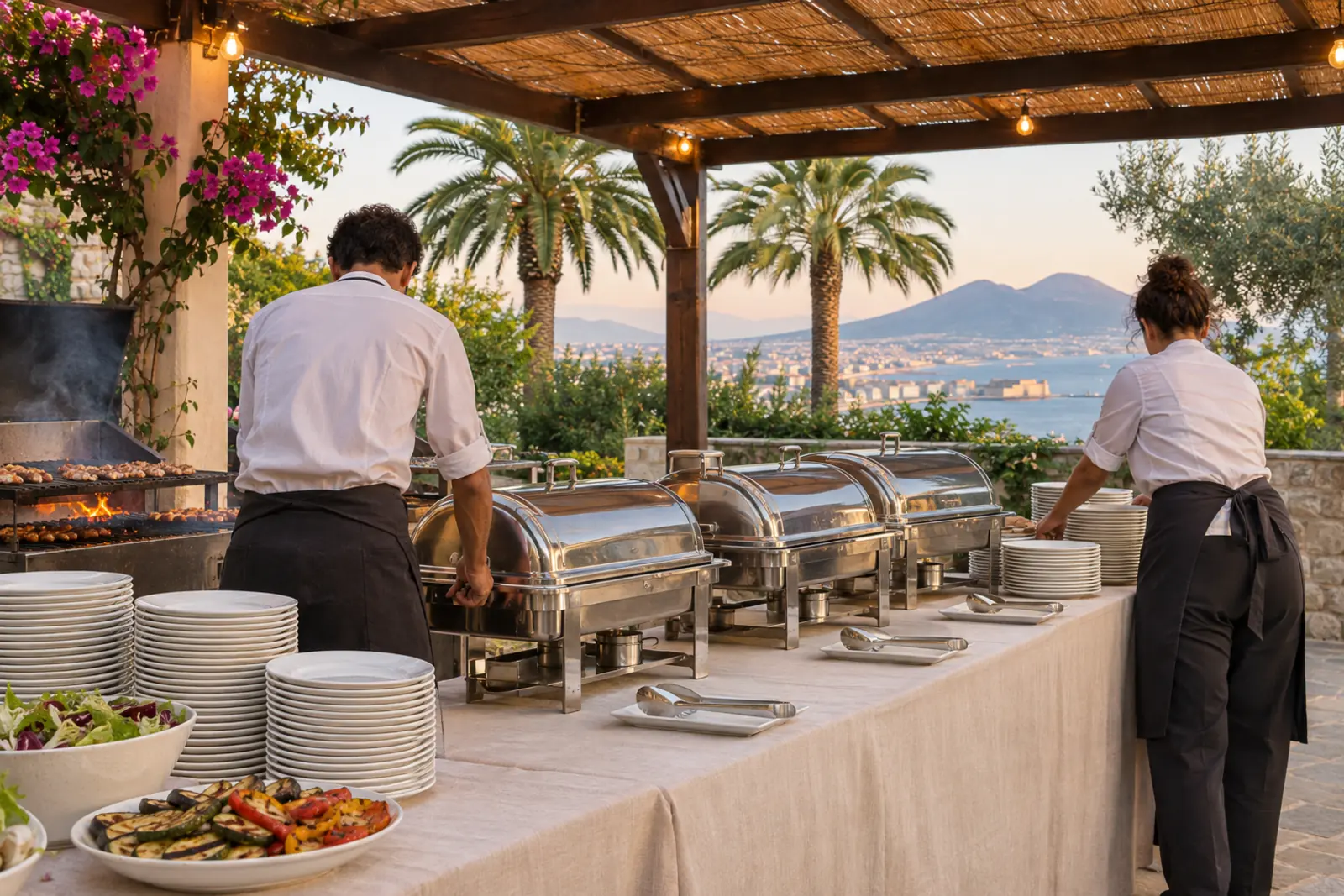
To choose barbecue catering for an event in Naples, start with your headcount, budget, venue rules and service style, then compare caterers on the same written terms. Confirm that the caterer operates under a Florida food service license from the Department of Business and Professional Regulation, ask how hot food will be held at 140°F or above and cold food at 40°F or below, find out whether they cook on site or bring finished food, and get every inclusion, fee and deadline in writing. Book early for events during the busy winter season, when calendars in Southwest Florida fill up fastest.
This guide does not recommend or rate any caterer. It gives you the questions to ask so you can compare offers on equal footing.
Decide what you need before you call anyone
- Headcount and guest mix. A firm adult count, plus children, and how many guests have dietary needs. The quantities per person guide helps you check any proposal's portion sizes.
- Date, time and length. A two-hour lunch and a five-hour evening reception need different amounts of food and staff.
- Venue. A private home, a clubhouse, a park pavilion, a beachfront property or a rented hall. Each has its own rules.
- Service style. Drop-off, buffet with staff, family-style platters or plated service.
- Menu direction. Pulled pork and chicken, Texas brisket, ribs, or a mix. The barbecue styles guide explains the regional options.
- Budget range. Know your ceiling per person, including tax, service charges and gratuity.
How to find and shortlist BBQ caterers in Naples
Start with three sources: the venue (many have caterers they already work with and know the loading and power situation), people who hosted a similar event locally, and a map or web search for "bbq catering Naples FL". Shortlist two or three caterers whose menus and service styles match your event, then request the same written quote from each. Before paying a deposit, check the caterer's license and inspection history in the state's public records, described below.
Service styles compared
| Style | What usually happens | Good for | Watch out for |
|---|---|---|---|
| Drop-off | Food delivered in pans; you handle serving and cleanup | Office lunches, casual parties | Keeping food hot or cold is your job after delivery |
| Staffed buffet | Caterer sets up, serves or replenishes, and clears | Most mid-size events | Staff hours and minimums affect price |
| On-site smoking or pit | Meat cooked or finished at the venue | Large outdoor events, a show element | Venue permission, fire rules, smoke and space |
| Food truck | Guests order from a mobile unit | Casual gatherings, rolling service | Parking space, power, line times, minimum spend |
| Plated | Individual plates served at tables | Formal events | Higher staffing; barbecue is less traditional plated |
Barbecue caterer licensing in Florida: what to confirm
In Florida, catering is regulated by the Division of Hotels and Restaurants within the Department of Business and Professional Regulation (DBPR). According to the division's catering guide, catering generally means food prepared in one licensed kitchen and served at another location, such as the customer's event. Caterers must meet the standards for public food service establishments, and all storage and preparation must happen in an approved, licensed facility. Food operations are not allowed in a private residence.
There is more than one valid license route. A business that only caters typically holds a catering license, while the DBPR says any licensed public food service establishment, such as a restaurant, may also provide catering services. The division also states that holders of a temporary event license may not provide catering, so a pop-up vendor at a festival is not the same thing as a licensed caterer. Mobile food dispensing vehicles (food trucks) are licensed as such; the DBPR distinguishes these from vehicles used only to transport catered food to a contracted service location.
How to verify a caterer
- Ask for the business name, license type and license number.
- Look the license up through the DBPR's online licensee search or its Online Inspection Search for hotels and restaurants. The licensee search can be searched by business name or license number.
- Read the latest inspection reports. The DBPR describes each one as a snapshot of conditions on the day of inspection, so look at the pattern across several reports rather than a single visit.
- Ask where the food is prepared. It should be a licensed kitchen, not a home kitchen.
The division has adopted the 2017 FDA Food Code, effective November 1, 2019, and accepts complaints online. If alcohol will be served, that is a separate matter handled by the state's Division of Alcoholic Beverages and Tobacco, and the venue may have its own rules about who can pour.
Questions to ask every caterer
Food and menu
- Is the meat smoked in-house, and when? The day of the event or the day before?
- What is the portion size per person for each meat, in cooked ounces?
- How many sides are included, and what are the portions?
- Can you handle allergies and dietary needs, and how do you prevent cross-contact?
- Can we taste the food before signing, and is there a fee?
Food safety and holding
- How will hot food be kept at 140°F or above throughout service?
- How will cold sides be kept at 40°F or below on a hot day?
- How long will food sit out, and when is it removed?
- What happens to leftovers, and can we keep them?
The food safety guide for hot weather explains why these limits are especially important outdoors in Florida, and the BBQ temperature chart lists safe internal temperatures by meat, which helps when you ask how brisket, pork and chicken are cooked and finished.
Logistics
- How much setup time and space do you need? Do you need power or water?
- Do you bring tables, chafing dishes, serving utensils, plates and napkins?
- Who handles trash and cleanup, and is that included?
- What is the plan for rain? Summer afternoons in Naples often bring thunderstorms.
- Will you provide a certificate of insurance if the venue asks for one?
Money and contract
- What exactly does the per-person price include?
- Is there a minimum order, a service charge, a delivery fee or travel fee?
- Is gratuity included or expected?
- When is the final headcount due, and can it go down after that?
- What are the deposit, payment schedule and cancellation terms?
Venue rules that affect barbecue
Many venues restrict open flames, smokers or charcoal on their property. Condominium and apartment communities in Florida are also bound by fire code limits on grills near buildings, explained in the guide to grilling rules at condos and balconies. Public beaches and parks have their own restrictions; the guide to grilling on Naples beaches and in parks covers what is and is not allowed. Before you book an on-site pit, get the venue's written permission and pass it to the caterer.
Comparing quotes fairly
| Line item | Quote A | Quote B |
|---|---|---|
| Cooked meat per person (oz) | ||
| Number and size of sides | ||
| Staff hours included | ||
| Equipment and disposables | ||
| Service charge and gratuity | ||
| Delivery or travel fee | ||
| Sales tax | ||
| Total for confirmed headcount |
A lower per-person price can hide smaller portions or extra fees. Compare totals, not headline numbers. Prices vary widely by menu, season and service level, so get written quotes rather than relying on any general figure.
Timing for Naples events
Southwest Florida's population and event calendar rise in the cooler, drier months, roughly from late fall through spring, when many seasonal residents are in town. Weddings, galas and holiday parties compete for the same dates. Reach out several months ahead for peak dates. In summer, availability is often better, but heat and rain make indoor or covered spaces worth considering. Summer and early fall also fall within hurricane season, so ask any caterer for their postponement and refund terms in writing, and see the guide to grilling during hurricane season if your event relies on outdoor cooking.
Frequently Asked Questions
Do caterers in Florida need a license?
Yes. Catering is regulated by the Division of Hotels and Restaurants of the Florida DBPR. A licensed restaurant can generally cater under its existing license, while a business that only caters typically holds a catering license. Food must be prepared in an approved licensed facility.
How far in advance should I book barbecue catering in Naples?
For events during the busy winter and spring season, contact caterers several months ahead, especially for Saturdays and holidays. Summer and weekday events can often be arranged on shorter notice.
Can a caterer smoke meat on site at my event?
Sometimes. It depends on the venue's rules, fire code limits on open flames near buildings, available space and the caterer's equipment. Get written permission from the venue before agreeing to on-site cooking.
What should a catering contract include?
The menu with portions, headcount and its deadline, service style and staff hours, equipment, setup and cleanup, all fees, gratuity, deposit and payment schedule, cancellation terms and a weather plan.
How can I check a caterer's license?
Ask for the license number and look it up with the Florida DBPR's online license search. The record shows the license type and status for the business, and the DBPR's Online Inspection Search lets you read inspection reports for licensed hotels and restaurants.