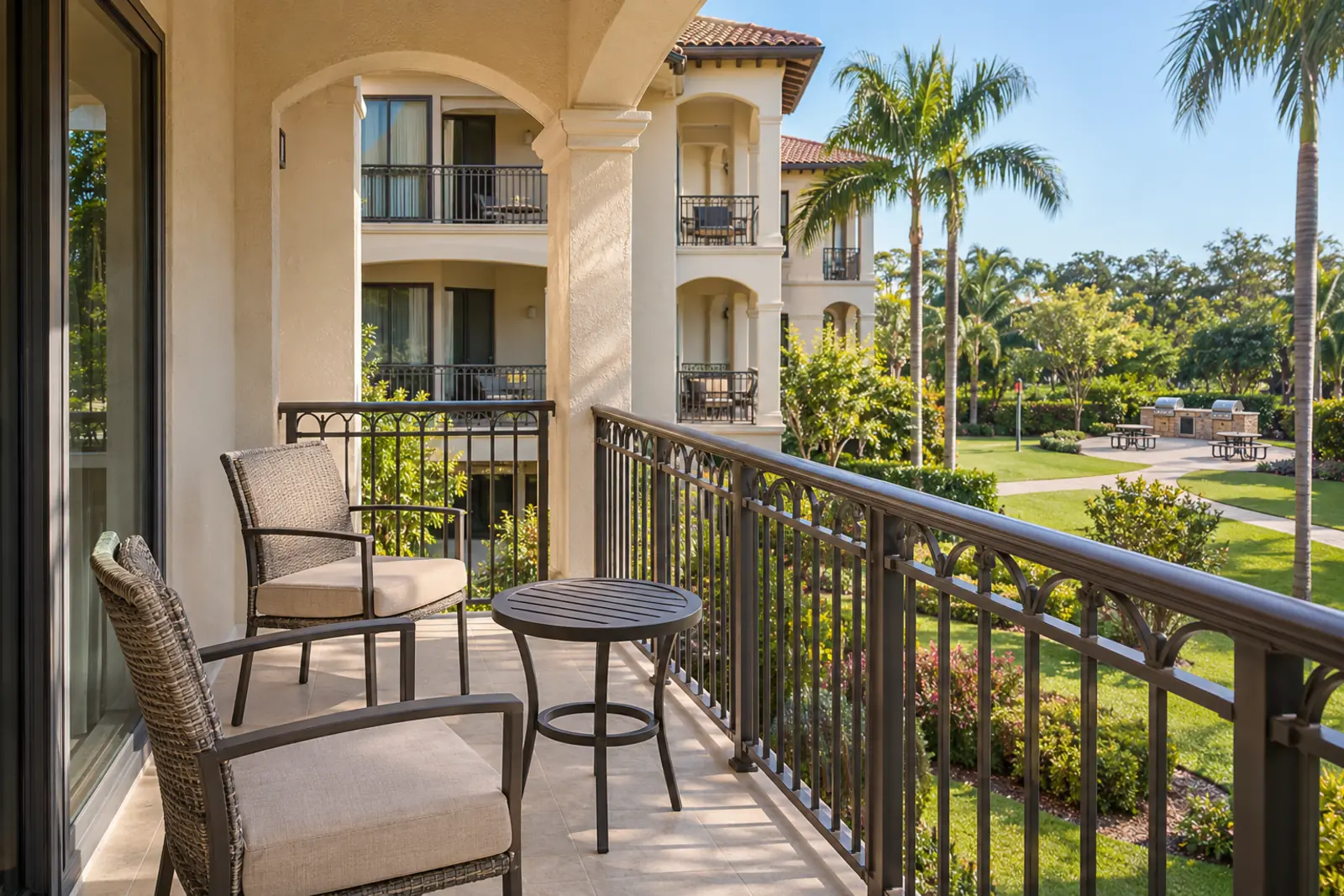
In most Florida condominiums and apartment buildings, you cannot use a charcoal or gas grill on a balcony. The Florida Fire Prevention Code, which is based on the national NFPA 1 Fire Code with Florida amendments, says that in buildings other than one- and two-family dwellings, grills, hibachis and similar cooking devices may not be used or lit on a balcony, under an overhang, or within 10 feet of a structure, and may not be stored on a balcony. Florida's version allows listed electric tabletop grills with no more than 200 square inches of cooking surface. Your condo association or landlord can be stricter than the code, and local fire marshals interpret how it applies, so check both before you buy a grill.
This page is general information, not legal advice. Fire codes are updated periodically, and the version and interpretation that apply to your building may differ.
Florida fire code rules for grills on balconies
The State Fire Marshal adopts the Florida Fire Prevention Code statewide, at three-year intervals under Section 633.202 of the Florida Statutes. The Division of State Fire Marshal's code page lists an 8th Edition with an effective date of December 31, 2023 and a 9th Edition with an effective date of December 31, 2026 (as of November 2026), so the edition in force for a given building depends on the date. Local governments may add stricter requirements but not weaker ones, and the state notes that local amendments are enforceable only by the local jurisdiction. The grill provision has kept the same core idea through recent editions, even as section numbers have shifted.
| Situation | General rule for multifamily buildings |
|---|---|
| Charcoal grill on a balcony | Not allowed to be used or lit |
| Gas (propane) grill on a balcony | Not allowed to be used or lit |
| Any grill under an overhang | Not allowed |
| Any grill within 10 feet of the building | Not allowed |
| Storing a cooking grill on a balcony | Not allowed |
| Listed electric tabletop grill, 200 sq in or less | Allowed under the Florida exception, subject to building rules |
| Listed, permanently installed cooking equipment | May be allowed if installed per its listing and codes, usually with permits |
One- and two-family dwellings, such as single-family homes and duplexes, fall outside this particular provision, though common sense and manufacturer instructions about clearances still apply.
What the 10-foot rule means in practice
The overhang and distance limits are separate conditions. A grill under a roof overhang, walkway or the balcony of the unit above is covered by the overhang restriction even if it is more than 10 feet from the wall, and a grill in the open still has to stay at least 10 feet from the structure. This is why many communities provide shared grill stations away from the buildings instead of letting residents cook on balconies.
Why the rule exists
Balcony fires spread upward and sideways quickly. Embers and grease flare-ups can ignite furniture, awnings and the balcony above, and multistory buildings make evacuation and firefighting harder. Gas cylinders add a further hazard if they leak or are exposed to fire. The 10-foot distance gives a buffer between open flame and the building.
Common questions about specific spaces
Ground-floor patios and lanais
Some fire marshals treat a ground-floor patio attached to a multifamily building like a balcony, especially if it sits under the unit above. Others look at the specific layout. Ask your local fire marshal's office instead of assuming.
Screened lanais
A screened lanai is usually attached to and covered by the structure. In a multifamily building, the same restrictions on overhangs and distance typically apply. In a single-family home, follow the grill manufacturer's clearance instructions and keep it well away from screens, roof edges and walls.
Community grills
Many Naples-area condominium and HOA communities provide shared grills by the pool or clubhouse, placed to comply with distance rules. These are often the simplest legal option for residents of multistory buildings. Follow the posted community rules for use and cleanup, and treat shared grills like any other outdoor cooking: keep raw and cooked food separate and mind the clock in summer heat, as explained in the guide to BBQ food safety in Florida heat.
Electric grills: the balcony-friendly option
If your building allows them, listed electric grills are the main way to cook on a balcony. Look for:
- A recognized testing laboratory listing mark on the product.
- A cooking surface of 200 square inches or less if you are relying on the Florida exception.
- An outdoor-rated extension cord, if one is needed at all, and a GFCI-protected outlet.
- Your association's written approval, since many declarations restrict any cooking device on balconies.
Electric grills will not produce the smoke flavor of charcoal, but a small smoker box or a sprinkle of smoked salt helps. Doneness is the same as on any grill, so keep a probe thermometer handy and use the BBQ temperature chart for safe internal temperatures. For a deeper comparison of equipment, see the guide to choosing a grill or smoker.
HOA grill rules in Florida: association and lease rules
Florida condominium declarations, HOA rules and apartment leases can ban grills entirely, limit them to certain areas, or require approval. These rules can go further than the fire code, and associations can fine owners who break them.
Florida's condominium statute, Section 718.113, also says a unit owner shall not do anything within the unit or on the common elements that would adversely affect the safety or soundness of the common elements or of association or condominium property that the association maintains, which is one reason boards may treat open-flame cooking seriously. Before buying a grill:
- Read the declaration, rules and regulations, or your lease.
- Ask the property manager in writing what is allowed and where.
- Check insurance requirements, since some policies exclude damage from prohibited activities.
- Keep a copy of any written approval.
Propane cylinders
Even if you grill elsewhere, storing propane cylinders in a condo unit, on a balcony or in an enclosed garage is a safety concern and is often restricted. Keep cylinders upright, outdoors, in a ventilated area away from ignition sources, and transport them secured and upright with the valve closed. The hurricane season grilling guide covers safe cylinder storage before and after storms.
Who to ask in Naples
Naples and the surrounding area are served by more than one fire agency, including the City of Naples Fire-Rescue Department inside city limits and independent fire districts in unincorporated Collier County. The fire marshal's office for your address can explain how the code is enforced locally and whether local amendments apply. The Florida Division of State Fire Marshal publishes the current code edition.
If your building rules make home grilling impractical, public parks and beaches are another option, with their own limits explained in the guide to grilling at Naples beaches and parks.
Frequently Asked Questions
Can I use a propane grill on my condo balcony in Florida?
Generally no. In buildings other than one- and two-family dwellings, the Florida Fire Prevention Code bars using or lighting gas and charcoal grills on balconies, under overhangs or within 10 feet of the structure.
Are electric grills allowed on Florida balconies?
Florida's fire code allows listed electric tabletop grills with a cooking surface of no more than 200 square inches. Your condo association or landlord may still restrict them, so check your building's rules.
Can my condo association ban grills completely?
Yes. Associations and landlords may adopt rules stricter than the fire code, including banning grills on balconies and patios, and may enforce them through fines or lease terms.
Does the 10-foot rule apply to single-family homes?
This specific provision applies to buildings other than one- and two-family dwellings. Homeowners should still follow the grill manufacturer's clearance instructions and keep grills away from walls, eaves and screens.
Can I store my grill on the balcony if I do not use it there?
Not in a multifamily building. The fire code provision also prohibits storing cooking grills on balconies, not just using them there.