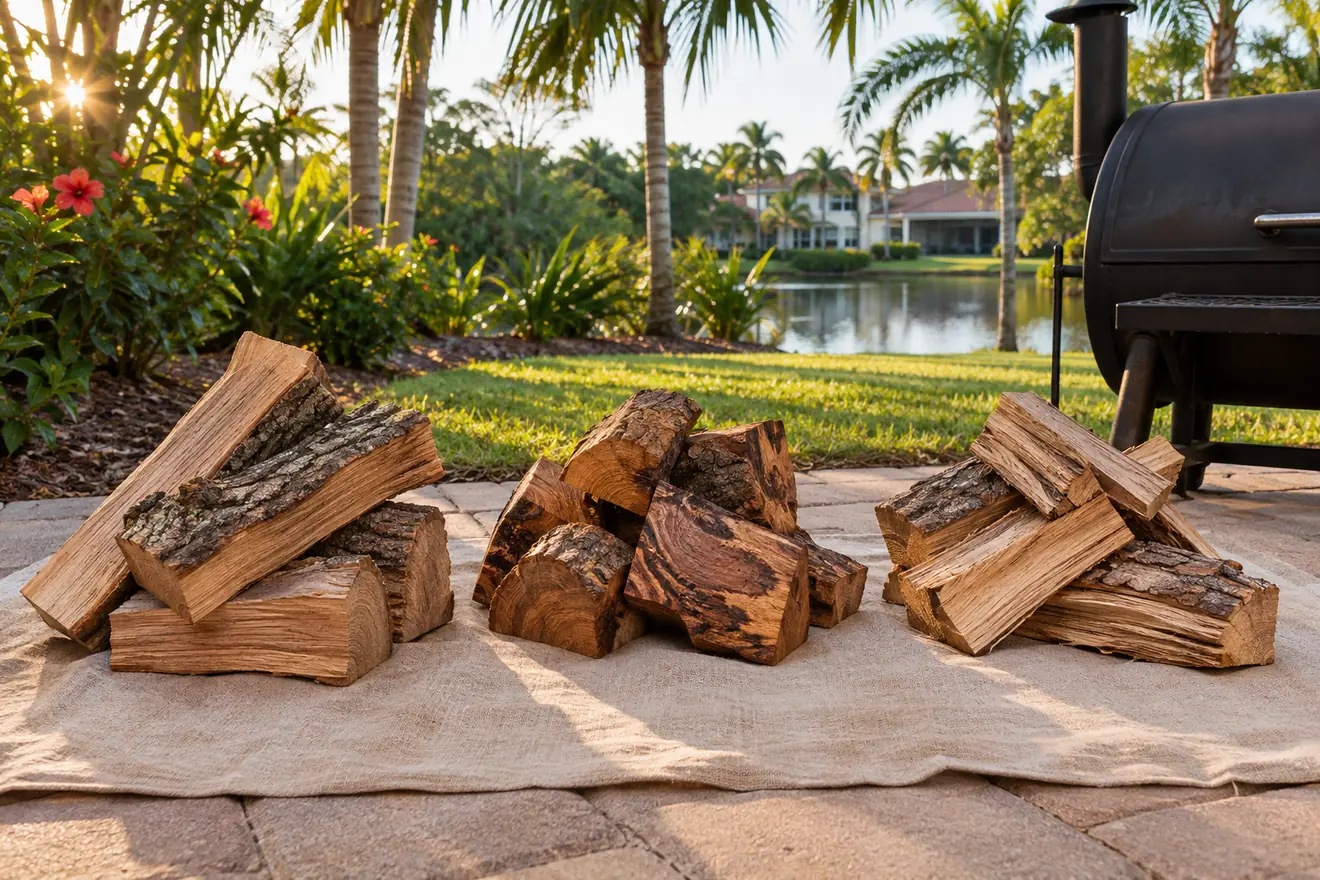
The best wood for smoking meat is clean, seasoned hardwood with no paint, treatment or mold. Oak is the most versatile all-rounder and works with beef, pork and poultry. Hickory and pecan add a stronger, classic Southern flavor. Fruit woods such as apple, cherry and citrus are milder and suit chicken, pork and fish. Mesquite is intense and better for short cooks. In Southwest Florida, oak and citrus are easy to find, but some common local plants must never go near a cooking fire: oleander is toxic, and Brazilian pepper is related to poison ivy and produces irritating smoke. Never burn pressure-treated lumber, pallets of unknown origin, painted wood or resinous softwoods such as pine.
Smoking woods compared
| Wood | Flavor strength | Character | Good with |
|---|---|---|---|
| Oak (post oak, red oak, white oak, live oak) | Medium | Clean, steady smoke; burns long | Brisket, beef ribs, pork, sausage |
| Hickory | Medium-strong | Savory, bacon-like | Pork shoulder, ribs, ham |
| Pecan | Medium | Nutty, a little sweeter than hickory | Pork, poultry, brisket |
| Mesquite | Strong | Earthy, sharp; can turn bitter on long cooks | Steaks, fajitas, short grilling |
| Apple | Mild | Sweet and fruity, slow to build flavor | Poultry, pork, fish |
| Cherry | Mild-medium | Fruity; deepens the color of the bark | Pork, chicken, duck |
| Citrus (orange, grapefruit, lemon) | Mild | Light, slightly fruity | Fish, chicken, pork |
| Maple | Mild | Subtle, slightly sweet | Poultry, vegetables, cheese |
Many cooks blend woods: oak as the base fuel with a chunk of cherry for color, or hickory with apple to soften it. There are no rules beyond using clean, safe wood.
Chunks, chips, splits or pellets?
- Splits are full logs, used as the main fuel in offset smokers.
- Chunks are fist-sized pieces added to a charcoal fire. They smolder for a long time and are the usual choice for kettles and kamados.
- Chips burn fast, which suits gas grills and short cooks. Put them in a smoker box or foil pouch.
- Pellets are compressed sawdust made for pellet grills. Buy food-grade pellets intended for cooking, never heating pellets.
Soaking chips or chunks in water is a common habit, but it mostly delays smoldering and produces steam at first. Many experienced cooks skip it. What matters more is a well-managed fire.
Clean smoke beats more smoke
The goal is thin, almost invisible smoke, often described as pale blue. Thick white or gray smoke comes from a fire starved of air or from wet, smoldering wood, and it leaves a sour, bitter taste. To keep smoke clean:
- Let the charcoal or wood burn down to a steady bed before adding meat.
- Keep vents open enough for good airflow, and control temperature with the intake rather than choking the exhaust.
- Add only a few chunks at a time.
- Use seasoned wood, not green wood from a freshly cut tree.
Florida woods: what you can use
Southwest Florida has plenty of usable hardwood if it is clean and properly dried.
- Oak. Live oak and laurel oak are widespread in Florida. Seasoned oak burns hot and steady and is a solid base fuel.
- Citrus. Orange and grapefruit wood from pruned backyard trees gives mild, fruity smoke well suited to fish and chicken. Dry it first.
- Pecan and hickory. These grow in North Florida and are sold in bags across the state.
- Store-bought chunks and pellets. Labeled cooking wood is the simplest choice if you are unsure what a tree is.
Green wood straight from a storm cleanup is wet and smoky. Split it and let it season under cover, off the ground, for many months before cooking with it. In a humid climate, drying takes longer than many guides written elsewhere suggest.
What wood not to use for smoking meat
The short list: never smoke with treated, painted or glued wood, resinous softwoods, moldy wood, or any plant you cannot identify. In Florida, add oleander and Brazilian pepper to that list.
| Avoid | Why |
|---|---|
| Oleander | All parts of the plant are toxic. Never use it for cooking, skewers or kindling. |
| Brazilian pepper (Florida holly) | An invasive tree in the same family as poison ivy; its smoke is irritating |
| Pressure-treated, painted or stained lumber | Chemical treatments and coatings release harmful fumes |
| Pallets | Origin and treatment are often unknown |
| Pine, cedar, cypress and other softwoods | Resin causes harsh, sooty smoke and an unpleasant taste |
| Moldy or rotten wood | Off flavors and unknown contaminants |
| Plywood, particleboard, driftwood | Glues and salt; not food-safe fuel |
| Unidentified yard wood | If you cannot name the tree, do not cook with it |
Information about Brazilian pepper and other invasive plants is available from UF/IFAS Extension. Removing it is encouraged, but the cuttings belong in yard waste collection, not a smoker.
Storing wood in a humid climate
- Keep chunks and splits off the ground on a rack, covered on top but open on the sides for air.
- Store pellets in a sealed, airtight container. Damp pellets swell, crumble and can jam an auger.
- Keep charcoal in a closed bin. Moist charcoal is hard to light and burns unevenly.
- Check for termites and mold before bringing wood near the house.
More on keeping equipment working in salty, humid air is in the guide to choosing a grill or smoker for a coastal climate, and the effect of weather on the cook itself is covered in smoking meat in heat, humidity and summer storms.
Best wood for smoking brisket
Oak is the dependable base for brisket: it burns steadily with clean, medium smoke over a long cook. Pecan and hickory suit cooks who want a stronger, more savory note, and a chunk of cherry can deepen the color of the bark. Mesquite is better kept for short cooks, since it can turn bitter over many hours. Regional preferences are explained in regional American barbecue styles.
Best wood for smoking ribs
Hickory and pecan are the classic choices for pork ribs, and apple or cherry give a milder, sweeter result. A common approach is hickory with apple to soften it. Beef ribs hold up to oak. Ribs cook faster than brisket, so add only a few chunks at a time to avoid over-smoking. For doneness and internal temperatures, see the BBQ temperature and cook time chart.
Matching wood to the cook
For pulled pork, hickory, pecan or a hickory-and-apple mix are classic. For fish, including smoked mullet, a lighter wood such as citrus, oak or a fruit wood keeps the flavor from overwhelming delicate flesh. Poultry absorbs smoke quickly, so start with milder woods and fewer chunks. When planning how much meat to smoke for a crowd, see how much BBQ per person.
Frequently Asked Questions
What is the best all-purpose wood for smoking?
Oak is the most versatile choice. It burns steadily with medium, clean smoke that suits beef, pork and poultry alike, and it blends well with fruit woods when you want a sweeter note.
Can I smoke with orange or citrus wood from my yard?
Yes, if it is untreated and has been dried. Citrus gives mild, slightly fruity smoke that pairs well with fish and chicken. Fresh cuttings are wet, so let them season before use.
Is Brazilian pepper wood safe for smoking?
No. Brazilian pepper is an invasive tree in the same plant family as poison ivy, and its smoke is irritating. Dispose of it through yard waste collection rather than burning it.
Should I soak wood chips before smoking?
It is optional. Soaking mainly delays the moment the wood starts to smolder and creates steam at first. A clean, well-ventilated fire matters much more for flavor than soaking.
Can I use any pellets in a pellet grill?
Use only food-grade pellets made for cooking. Heating pellets for stoves may contain softwoods or binders not meant for food. Keep cooking pellets dry in a sealed container.